






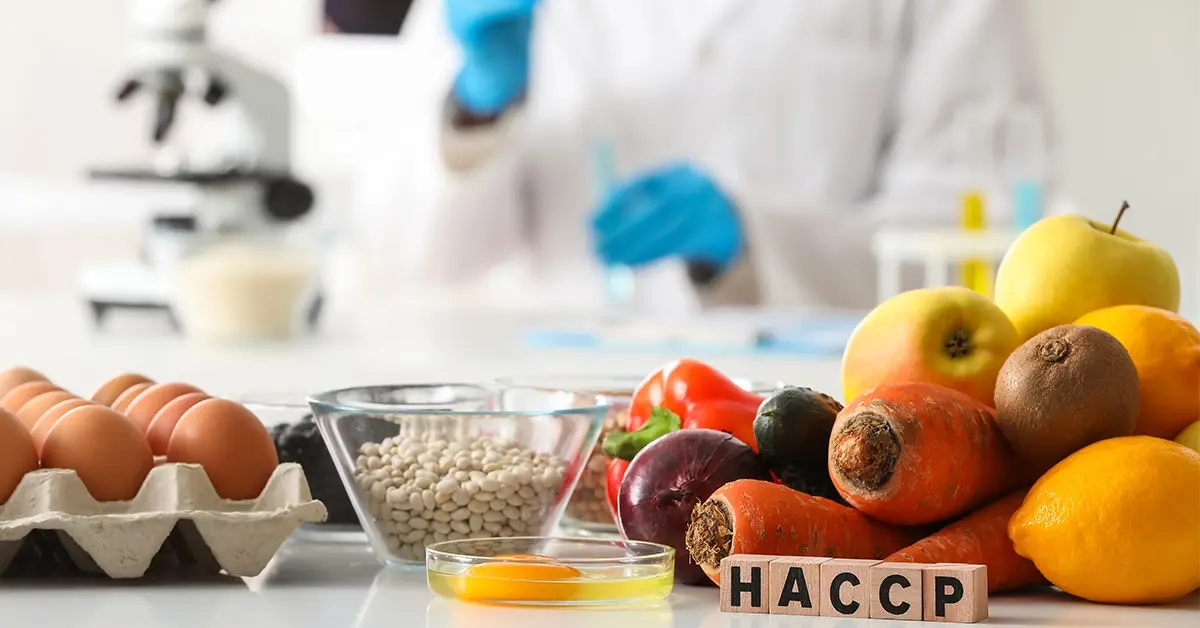
Discover how GLOBAL G.A.P, HACCP, and ISO 22000 help food producers improve safety, compliance, traceability, and supply chain resilience.
The Importance of GLOBAL G.A.P, HACCP, and ISO 22000 Food Certifications
Recent geo-political events have shaken global food supply chains. At the same time, growing scrutiny and regulatory oversight are shifting how food is grown, sold, and consumed. Increasing awareness, tighter quality requirements, and safety concerns from regulators, retailers, and consumers are also shifting the food industry compliance. This is why food producers need certifications such as GLOBAL GAP, HACCP, and ISO 22000 as they form the backbone of safe, compliant, and resilient operations.
These frameworks provide structured, verifiable approaches to managing food safety, quality, and traceability from farm to fork. When implemented effectively and supported by independent Testing, Inspection, and Certification (TIC) partners like Cotecna, these certifications enable producers to reduce risk, improve market access, and build long-term trust.
What GLOBAL GAP, HACCP, and ISO 22000 Mean in Practice
Each certification plays a distinct but complementary role across the food value chain:
GLOBAL G.A.P – Farm Level Assurance
GLOBAL G.A.P. certification ensures farm-level assurance by promoting safe, sustainable, and traceable agricultural practices from soil preparation through to harvest and post-harvest handling. By implementing GLOBAL G.A.P. standards, producers can minimise contamination risks, meet international food safety requirements, and enhance crop quality and consistency.
GLOBAL G.A.P. strengthens food supply chains by improving traceability, transparency, and compliance with retailer and export requirements; facilitating smoother market access and increasing buyer confidence. Ultimately, GLOBALG.A.P. certified operations contribute to more resilient and efficient supply chains while supporting consumer safety and sustainable agriculture.
Meeting GLOBAL G.A.P Requirements
GLOBAL G.A.P. requirements involve implementing structured, auditable processes that ensure food safety, sustainability, and farm-level quality control.
Key GLOBAL G.A.P. requirements typically include:
1. Food Safety & Hygiene
- Hygienic practices and contamination controls
- Safe use of fertilisers and crop protection products
2. Traceability & Records
- Full farm traceability and batch identification
- Documented records of inputs and activities
3. Soil & Water Management
- Soil health and nutrient management
- Safe irrigation and water quality monitoring
4. Crop Protection
- Approved pesticide use (MRLs compliant)
- Integrated Pest Management (IPM) practices
5. Harvest & Post-Harvest
- Clean equipment and hygienic handling
- Controlled storage, packing, and transport
6. Environmental Sustainability
- Efficient use of water and energy
- Biodiversity protection and waste management
7. Worker Health & Safety
- Safe working conditions and PPE
- Training and compliance with welfare standards
8. Certification & Audits
- Compliance with GLOBALG.A.P. IFA standards
- Regular audits and continuous improvement
HACCP – Risk Prevention in Food Processing
HACCP (Hazard Analysis and Critical Control Points) is a preventive risk management system that ensures food safety throughout processing by identifying, monitoring, and controlling potential hazards at critical stages. By implementing HACCP principles, food processors can minimise contamination risks, maintain compliance with international safety standards, and ensure consistent product quality.
HACCP strengthens food supply chains by improving traceability, risk mitigation, and regulatory alignment, enabling safer global trade and reinforcing consumer trust in food products.
Meeting HACCP Requirements
Meeting HACCP (Hazard Analysis and Critical Control Points) requirements involves implementing a structured, preventive approach to food safety across processing operations.
Key steps include:
1. Conduct a Hazard Analysis
- Identify potential biological, chemical, and physical hazards at each stage of production
- Assess risk levels and determine where controls are needed
2. Identify Critical Control Points (CCPs)
- Define stages where hazards can be prevented, eliminated, or reduced (e.g. cooking, cooling, storage)
3. Establish Critical Limits
- Set measurable thresholds (e.g. temperature, time, pH levels) to control hazards at each CCP
4. Implement Monitoring Procedures
- Regularly monitor CCPs to ensure limits are consistently met
- Maintain records of checks and controls
5. Define Corrective Actions
- Establish clear steps to take when deviations occur
- Ensure unsafe products are isolated and addressed
6. Verification and Validation
- Conduct internal audits, testing, and reviews to confirm the HACCP plan is effective
- Validate processes against regulatory and industry standards
7. Documentation and Record Keeping
- Maintain detailed documentation of hazard analysis, monitoring, corrective actions, and audits
- Ensure full traceability and compliance
8. Training and Hygiene Practices
- Train staff on HACCP principles, hygiene, and food safety procedures
- Enforce strict sanitation and operational controls
ISO 22000 – End-to-End Food Safety Management
ISO 22000 is a comprehensive food safety management system that integrates HACCP principles, risk-based thinking, and end-to-end control across the entire food supply chain. By implementing ISO 22000, organisations can systematically identify hazards, strengthen traceability, communication, and process control, and ensure compliance with international food safety standards.
ISO 22000 helps strengthen food supply chains by improving risk management, operational consistency, and transparency, enabling safer global trade, enhanced supplier coordination, and greater confidence among regulators, partners, and consumers.
Meeting ISO 22000 Requirements
Meeting ISO 22000 requirements involves implementing a structured Food Safety Management System (FSMS) that integrates risk-based thinking, HACCP principles, and continuous improvement across the entire supply chain.
Key requirements include:
1. Food Safety Management System (FSMS) Setup
- Establish a documented FSMS aligned with ISO 22000 standards
- Define scope, policies, and clear food safety objectives
2. Hazard Analysis and Risk Management
- Identify and assess food safety hazards across all processes
- Implement control measures using HACCP and operational prerequisite programmes (oPRPs)
3. Prerequisite Programmes (PRPs)
- Maintain basic hygiene and operational conditions (e.g. sanitation, pest control, facility maintenance)
- Ensure a safe processing environment
4. Leadership and Governance
- Strong management commitment to food safety culture
- Defined roles, responsibilities, and accountability across the organisation
5. Traceability and Communication
- Ensure end-to-end traceability of products, inputs, and processes
- Establish clear communication across suppliers, partners, and regulators
6. Operational Control and Monitoring
- Define critical control points (CCPs) and monitoring procedures
- Implement controls to maintain food safety throughout production
7. Documentation and Record Keeping
- Maintain detailed records of processes, risk assessments, monitoring, and corrective actions
- Ensure audit readiness and regulatory compliance
8. Verification, Validation, and Improvement
- Conduct internal audits and performance reviews
- Apply corrective and preventive actions (CAPA)
- Continuously improve the FSMS
9. Training and Competence
- Ensure staff are trained in food safety, hygiene, and ISO 22000 requirements
- Build organisational awareness and capability
Together, these frameworks create supply chains that are:
- Transparent – Full traceability from farm to market
- Resilient – Standardised, auditable processes across suppliers
- Compliant – Aligned with international food safety regulations
Why These Certifications Matters for Food Production
GLOBAL G.A.P, HACCP, and ISO 22000 are essential frameworks that underpin safe, reliable, and compliant food production across global supply chains.
GLOBAL G.A.P ensure food safety begins at the source by promoting responsible farming methods, controlling contaminants, and protecting product integrity.
HACCP (Hazard Analysis and Critical Control Points) builds on this by systematically identifying, assessing, and controlling food safety risks throughout processing and handling.
ISO 22000 integrates these principles into a comprehensive, internationally recognized food safety management system, aligning stakeholders across the supply chain with consistent standards.
Together, these certifications help producers minimize risk, meet regulatory requirements, and build trust with customers by ensuring food is safe, traceable, and of consistent quality.
Certification benefits:
- Clear visibility of product origin and handling
- Faster response to incidents and recalls
- Stronger audit readiness
Cotecna support includes:
- Farm and facility audits
- Traceability and chain of custody verification, like FSSC 22000
- Certification against GLOBAL G.A.P, HACCP, and ISO standards
Improved Food Safety and Risk Reduction
By independently verifying product quality, compliance with international standards (such as HACCP, ISO, and GMP), and adherence to regulatory requirements, TIC providers help identify contaminants, ensure traceability, and prevent foodborne hazards before products reach consumers. This proactive approach not only minimizes the risk of recalls, penalties, and reputational damage but also strengthens consumer trust and market access, making certification an essential safeguard for food producers, exporters, and retailers alike.
These frameworks establish strict controls over contamination risks and production practices.
Providing:
- Reduced pesticide, microbiological, and contamination risks
- Consistent product safety across batches
- Lower likelihood of recalls and non-compliance
Cotecna support includes:
- Laboratory testing (residues, contaminants, microbiology)
- HACCP validation and compliance verification
- Pre-shipment inspection and conformity assessment
Stronger Market Access and Trade Compliance
GLOBAL G.A.P, HACCP, and ISO 22000 certifications play a vital role in improving market access for food producers by demonstrating compliance with internationally recognized food safety and quality standards. Retailers, importers, and regulatory authorities increasingly require these certifications as proof that products are produced, handled, and processed under controlled, risk-based systems.
By aligning with these frameworks, businesses can meet strict export requirements, reduce barriers to entry in high-value markets, and build trust with global buyers. Ultimately, certification enhances credibility, facilitates smoother cross-border trade, and opens doors to new commercial opportunities in competitive food supply chains.
Certified producers are better positioned to meet global buyer and regulatory requirements.
Certification provides:
- Easier access to export markets
- Compliance with retailer and importer standards
- Reduced border delays and inspection issues
Cotecna support includes:
- Certification aligned with target markets
- Regulatory compliance verification
- Trade documentation support
The role of Other Food Certifications Like FSCC 22000 and BRCGS Food
FSSC 22000 and BRCGS Food are internationally recognised food safety standards that help organisations strengthen control across the entire food production process. By requiring robust food safety management systems, hazard analysis (HACCP), traceability, and strict hygiene and operational controls, they reduce the risk of contamination, product recalls, and non-compliance. Their structured approach also improves process consistency, supplier management, and documentation, leading to more efficient and reliable production. Ultimately, certification to FSSC 22000 or BRCGS enhances both food safety outcomes and operational performance, while supporting market access and customer trust.
Greater Supplier Accountability and Consistency
Certification and other TIC services strengthen supplier accountability and consistency by establishing clear, standardized requirements across the supply chain. By auditing suppliers, verifying compliance, and monitoring performance against defined quality and safety benchmarks, TIC providers help ensure that all partners operate to the same high standards.
Certification reduces variability in product quality, minimizes the risk of non-compliance, and enhances traceability from source to market. As a result, businesses can build more reliable supplier networks, mitigate operational risks, and deliver consistently safe, high-quality food products to global markets.
Certification frameworks enforce standardised practices across operations.
Resulting in:
- Consistent product quality and yield
- Improved supplier performance
- Stronger, more reliable partnerships
Cotecna support includes:
- Supplier qualification and monitoring
- Performance audits and inspections
- Certification programmes that reinforce operational discipline
Sustainability and Responsible Production
Sustainability and responsible production are increasingly driven by certification and TIC services, which help organizations align with recognized Environmental, Social, and Governance (ESG) standards. Through independent verification of sustainable sourcing, resource efficiency, and ethical practices, TIC providers enable businesses to demonstrate transparency and accountability across their operations.
This not only supports compliance with evolving regulations and buyer expectations but also reduces environmental impact and strengthens brand reputation. As a result, companies can meet growing demand for sustainably produced food while building long-term resilience and trust in global supply chains.
GLOBAL G.A.P and ISO frameworks increasingly incorporate environmental and social criteria aligned with ESG goals.
Resulting in:
- Sustainable resource management
- Ethical labour practices
- Enhanced brand credibility
Cotecna support includes:
- ESG and sustainability audits
- Responsible sourcing verification
- Certification aligned with global sustainability standards
Implementing Certification Across the Value Chain
Forward thinking food producers are using certification as a strategic tool to add strength to their supply chains.
Key actions include:
- Mapping supply chains to identify risks and gaps
- Implementing traceability systems from farm to distribution
- Adopting GLOBAL G.A.P, HACCP, and ISO 22000 frameworks
- Verifying compliance through testing and inspection
- Continuously monitoring and auditing performance
Cotecna supports this journey with end-to-end TIC solutions, helping producers embed certification into daily operations.
Adding Strength to Food Supply Chains with Cotecna
In today’s highly regulated food sector, success depends on verifiable quality, safety, and compliance at every stage.
By integrating GLOBAL G.A.P, HACCP, and ISO 22000 with Cotecna’s testing, inspection, and certification expertise, food producers can:
- Strengthen supply chain resilience
- Ensure consistent food safety and quality
- Navigate complex regulatory environments with confidence
- Demonstrate measurable sustainability performance
Cotecna provides the independent assurance needed to turn certification into a competitive advantage, helping food producers build safer, stronger, and more reliable supply chains.
Cotecna Food Global Network
We are present globally delivering food expertise locally

Discover Cotecna Food Entities
- Baier Testing
- BCK
- Cotecna Lab Netherlands (NofaLab)
- ESTS
- Fitosoil
- Geochem-India
- Neotron
- Shiva Analyticals
- Suolo e Salute
- Wimpey Laboratories
To learn more about Cotecna Food Solutions, or to get a free quote, please contact us.
Follow us on Social Media to keep up with our Adding Strength to Supply Chains series.
About Cotecna Lab Netherlands
Cotecna Lab Netherlands (acting under the name NofaLab until January 1, 2027) provides reliable laboratory testing and analytical services, specializing in food, feed, and industrial applications. With ISO 17025 accreditation (L440), Cotecna Netherlands delivers accurate, science-based results that support sustainability, regulatory compliance, and operational efficiency. Through expert knowledge and advanced technology, Cotecna Netherlands helps clients optimize processes, enhance productivity, and meet international quality and safety standards.